Travel Stories · Graz, Austria
From a Walking Tour to a Family Homecoming: Our Journey Back to Graz
How an unexpected discovery in Vienna led us on a journey through family history, remembrance, and the kindness of strangers.
Sometimes the most meaningful travel experiences are the ones you never planned.
In August 2025, we set off on another European adventure, beginning in Vienna before continuing to Budapest and Graz, Austria.
Whenever we arrive in a new city, one of our favorite things to do is take a walking tour. We've become big fans of GuruWalk tours. They're a wonderful way to get our bearings, learn about the history and culture of a place, get in our steps, and discover neighborhoods or landmarks we might otherwise overlook.
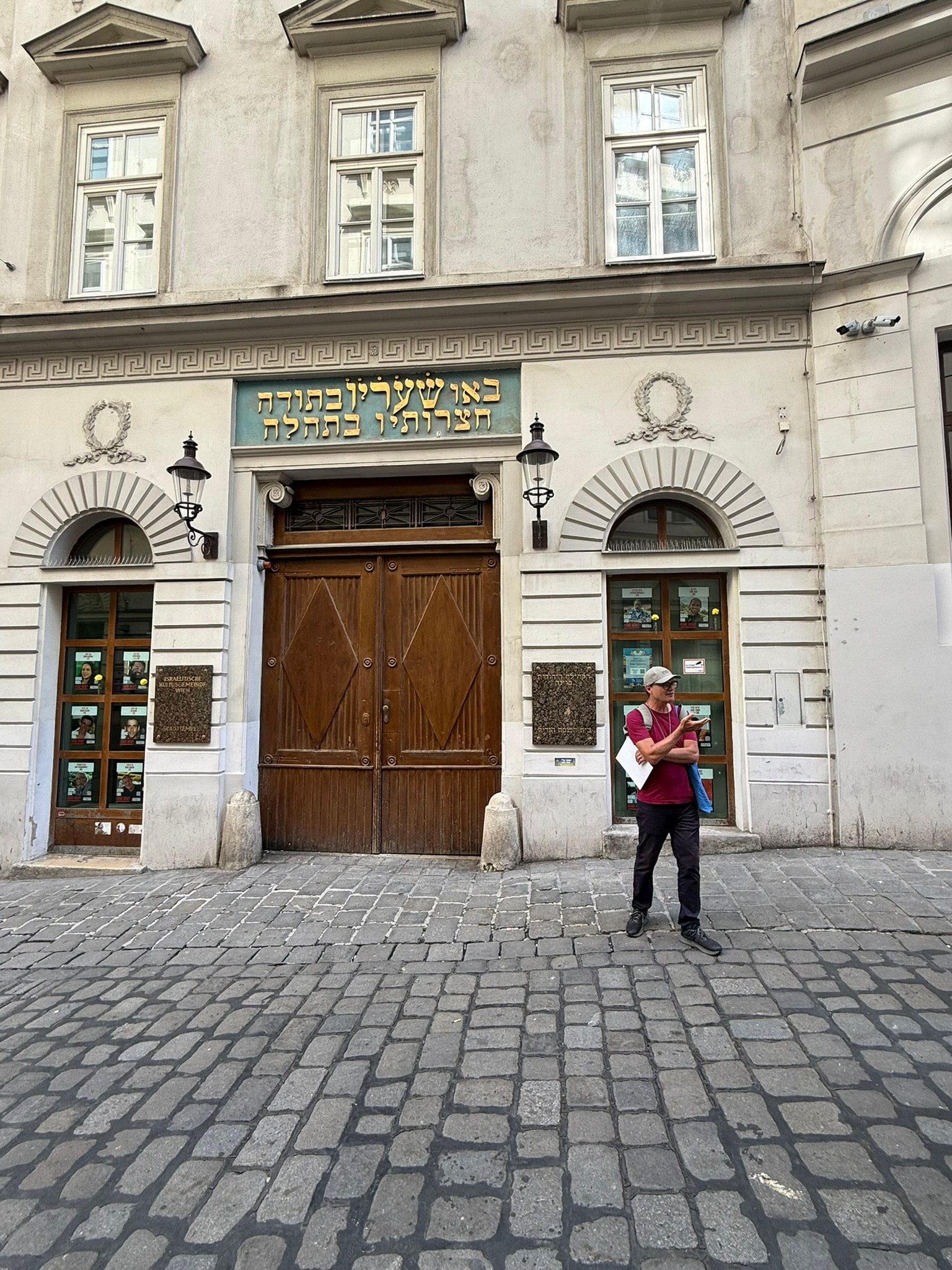
In Vienna, our guide, Klemens, was fantastic. During our tour, he mentioned that he also led an afternoon walk focused on the city's Jewish history and culture.
We signed up immediately.
That afternoon would change the direction of our travels in ways we never could have imagined.
One of the things Klemens introduced us to was the small brass memorial stones embedded in sidewalks outside homes and businesses. Known as Stolpersteine in German, or Stumbling Stones in English, they commemorate people persecuted by the Nazis, including those forced to flee their homes.
Once we learned about them, we began seeing them everywhere. Walking through Vienna, and later Budapest, we found ourselves looking down at the sidewalks, reading names, and wondering about the lives behind them.
We didn't know it then, but those little brass stones would soon become deeply personal.
A Different Kind of Visit to Graz
Although we'd traveled to Austria before, neither of us had been to Graz.
This visit was different.
Graz was the birthplace of Steve's father, Otto Jagoda. Otto had fled Austria at just 13 years old and never returned. He passed away in 2024 at the remarkable age of 99.
We knew visiting his hometown would be emotional, but we weren't entirely sure what to expect.
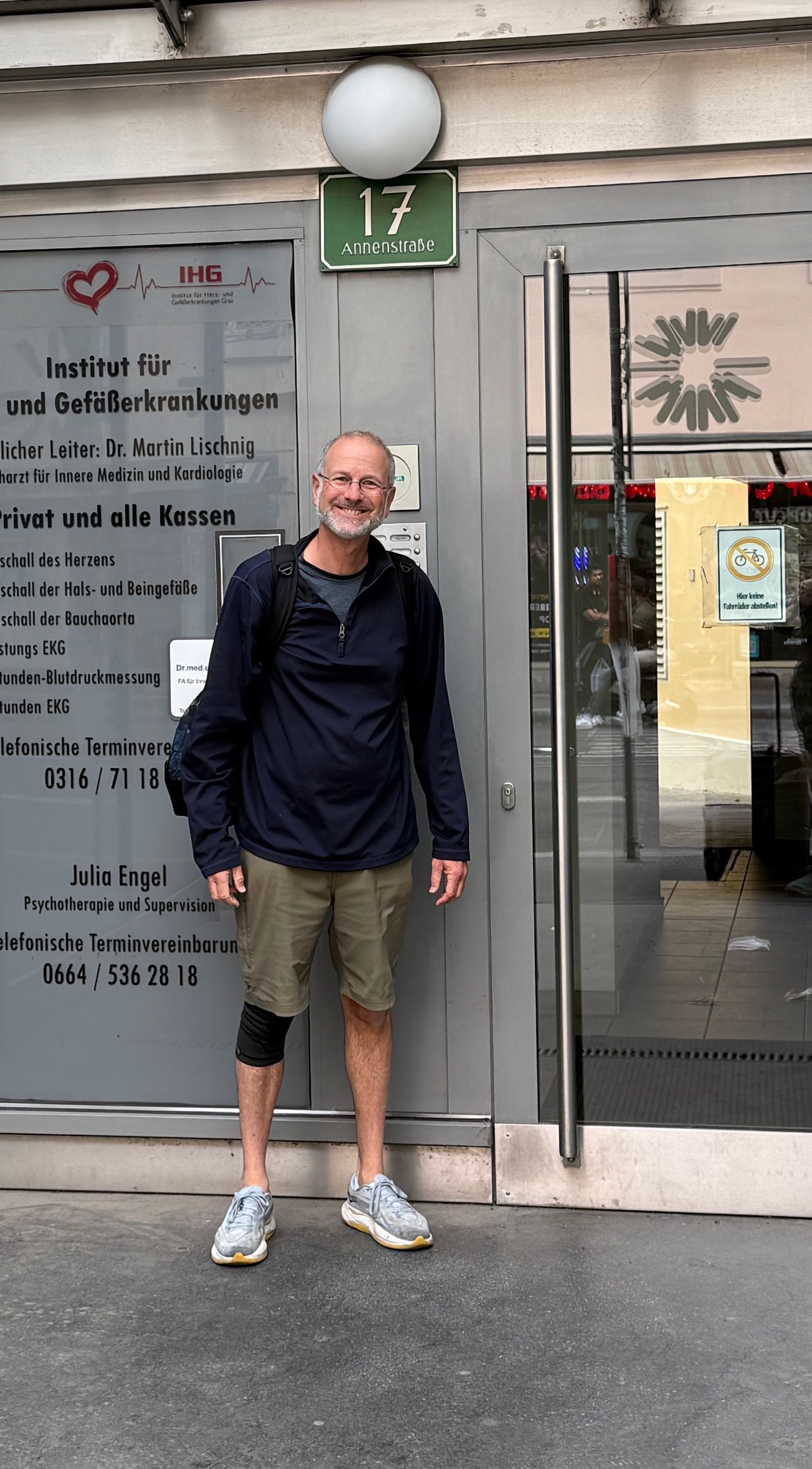
After arriving by train, we walked from the station toward our hotel. Along the way, we passed Annenstraße 17, the address where we understood the Jagoda family had once lived and operated their business.
We looked for the brass Stumbling Stones we'd become so familiar with in Vienna and Budapest.
But there were none for the Jagoda family.
Why not?
It was a simple question, but one we couldn't shake.
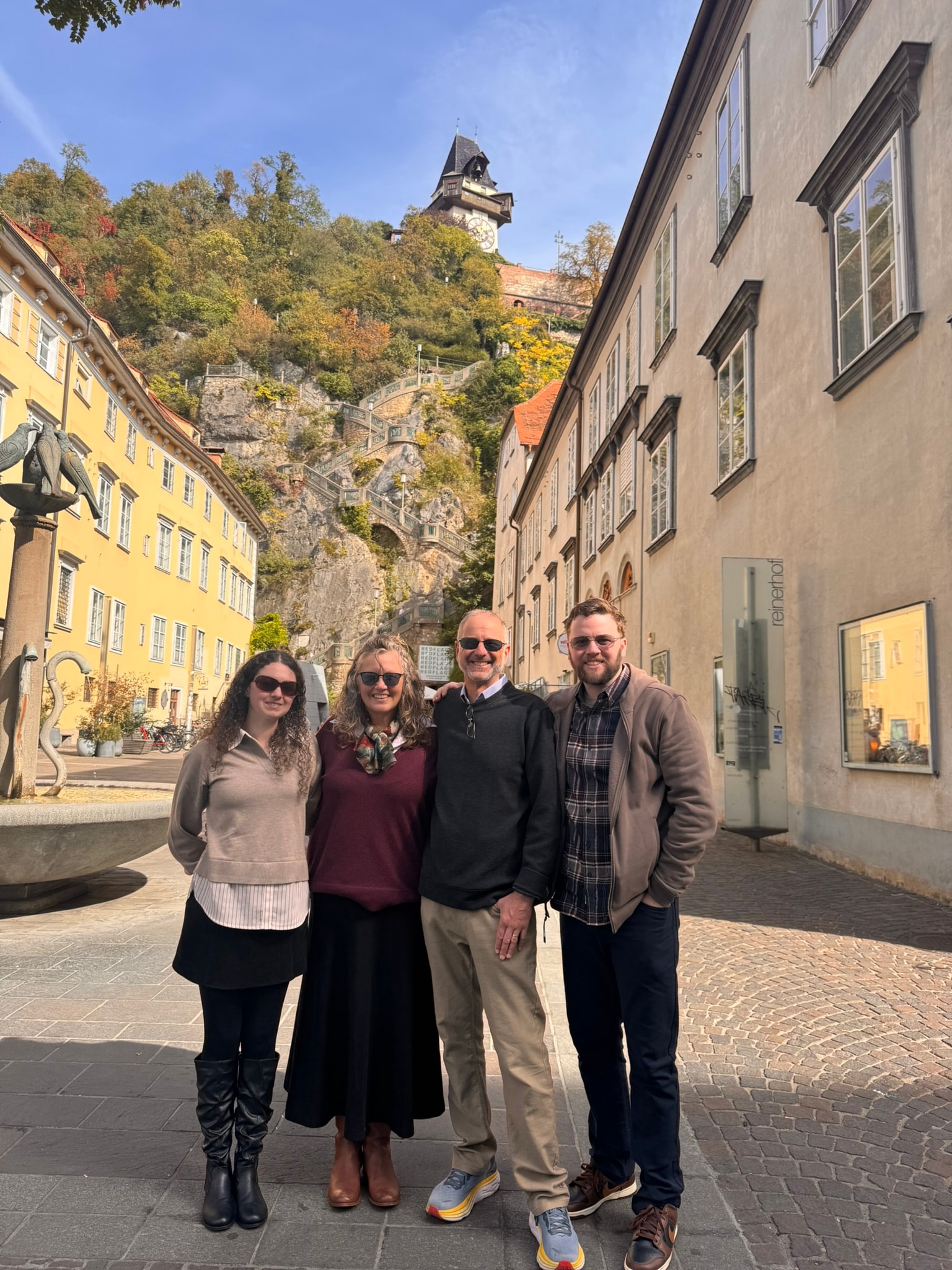
As we explored Graz over the following days, we found ourselves imagining Otto's life there. We'd climb the stairs to the famous clock tower and wonder whether Otto and his family had done the same. We'd wander the streets, enjoy the food and culture, and meet the wonderful people who make Graz such a charming city.
Somewhere along the way, Graz began to feel like more than another stop on our European adventure.
We felt connected to this place.
And by the time we left, we had a mission: learn more about the Stumbling Stones, better understand the Jagoda family's history in Graz, and find out whether we could honor them in the same way.
From a Question to a Mission
Our first step was reaching out to the synagogue in Graz, hoping someone might have information about the Jagoda family.
It took some time, but eventually we were connected with the local organization responsible for the Stumbling Stones.
That's when we began corresponding with Heribert, one of the organization's researchers.
His initial response was encouraging. The organization was interested in honoring the Jagoda family with Stumbling Stones, but first there was more history to uncover.
Heribert had already identified three Jagoda brothers who had lived in Graz — Samuel, Nathan, and Leo, Steve's grandfather. But he was surprised by how little information he could find about Leo and his family in the Graz archives.
He had questions about the family business, Leo's arrest and imprisonment at Dachau, and even which school Otto had attended.
And we had questions of our own.
What followed was months of emails, historical documents, family photographs, and discoveries. We shared what we knew, while Heribert and the researchers worked to piece together the family's history.
It was fascinating to see how information passed down through generations could help fill gaps in the historical record.
Uncovering a History We Never Knew
When we first arrived in Graz, we thought we knew where the Jagoda family had lived. We had walked past Annenstraße 17, imagining Otto growing up there.
But as the research unfolded, we learned that this address was actually the location of Leo Jagoda's textile business. The family had lived at Netzgasse 11, in an entirely different neighborhood near the river.
Suddenly, we had another part of Graz to discover.
And that was just the beginning.
The researchers uncovered information about Leo's two brothers, Nathan and Samuel, and their families who had also lived in Graz. Until then, we hadn't known about these other branches of the Jagoda family.
Some discoveries were fascinating. Others were difficult to absorb.
Through the research, we learned more about Leo's arrest and imprisonment at Dachau concentration camp in 1938, his eventual release, and the family's remarkable escape from Austria.
These weren't simply names and dates in historical documents. They were Steve's grandfather, grandmother, father, aunts, and uncles. People whose lives had unfolded on the very streets we'd walked during our visit.
With every exchange of information, Graz became more than Otto's birthplace. Its streets, buildings, and neighborhoods were becoming connected to real people, their lives, their businesses, and the history that had forced them to leave.
By the end of 2025, we received the news we'd been hoping for.
The Jagoda family's history had been verified, and seven members of the family had been approved to be honored with Stumbling Stones.
What had started as an unexpected discovery on a walking tour in Vienna had become something much bigger than we ever imagined.
Coming Back to Austria — As Austrian Citizens
While the research into the Jagoda family was unfolding, something else was happening.
I had encouraged Steve and our two children, Zach and Hannah, to pursue Austrian citizenship.
Because Otto and his family had been forced to flee Austria due to Nazi persecution, his descendants were eligible to apply for citizenship under provisions established for victims of Nazi persecution and their descendants.
The family documents and historical records helped establish their connection to Austria.
And before our return to Graz in October 2026, all three had received their Austrian citizenship.
For a family whose history included being forced to leave Austria, there was something particularly meaningful about Steve and our children returning to honor their ancestors — this time traveling with Austrian passports.
Bringing the Family Together
Once we received confirmation that the Jagoda family would be honored with Stumbling Stones, we began reaching out to relatives around the world.
We shared what we'd learned about the family's history, explained the work of the organization in Graz, and invited everyone to join us for the ceremony.
For some, it was an opportunity to reconnect with a part of their family history. For others, it became a chance to gather with relatives they hadn't seen in years.
One of our nephews, Brent, who had been updating the family tree for years, was especially excited to incorporate the new discoveries. Suddenly, there were new names, dates, and stories to add to the family's history.
Not everyone felt the same connection to the project, and not everyone could attend. But for those who made the journey, the experience would become something far more meaningful than a typical family reunion.
It was an opportunity to stand together in the city where the Jagoda family had once built their lives, and to honor the people whose stories had brought us all there.
Returning to Graz — This Time With Family
Nearly a year after our first visit, we returned to Graz. But this time, we weren't arriving as curious travelers wondering about the city's connection to our family.
We were returning with our children, relatives, and a much deeper understanding of the Jagoda family's history.
We arrived Thursday afternoon and planned a casual dinner at a local beer garden. Nothing formal, just an opportunity for everyone who wanted to join us to gather, catch up, enjoy a meal, and hopefully stay awake long enough to adjust to the time change.
We knew Friday would be a long day.
And what a day it turned out to be.
An Unexpected Change of Plans
Our Friday began at 9:30 a.m. at Graz City Hall, where we met for a tour of the city and sites connected to the Jagoda family's history.
But there had been a last-minute change.
The person who normally installs the Stumbling Stones had broken his hand. A replacement was available, but only in the morning, so the schedule had to be rearranged.
Instead of waiting until the afternoon ceremony to see the stones, we headed to the family's former apartment building at Netzgasse 11 while the installation was still underway.
And we got to participate!
Harold, Steve's brother and another of Otto's sons, handed one of the Stumbling Stones to their cousin Amnon, Dolphi's son.
Amnon, a builder and engineer, was right at home helping with the installation. He knelt on the sidewalk, helped prepare the ground, and positioned the stones while the rest of us gathered around and watched.
We were all perfectly happy to leave the hands-on work to him!
What could have been a frustrating last-minute scheduling change turned into an unexpected opportunity for the family to take part in the installation.
It was a small but meaningful moment, watching members of the next generation help return the Jagoda family names to the streets of Graz.
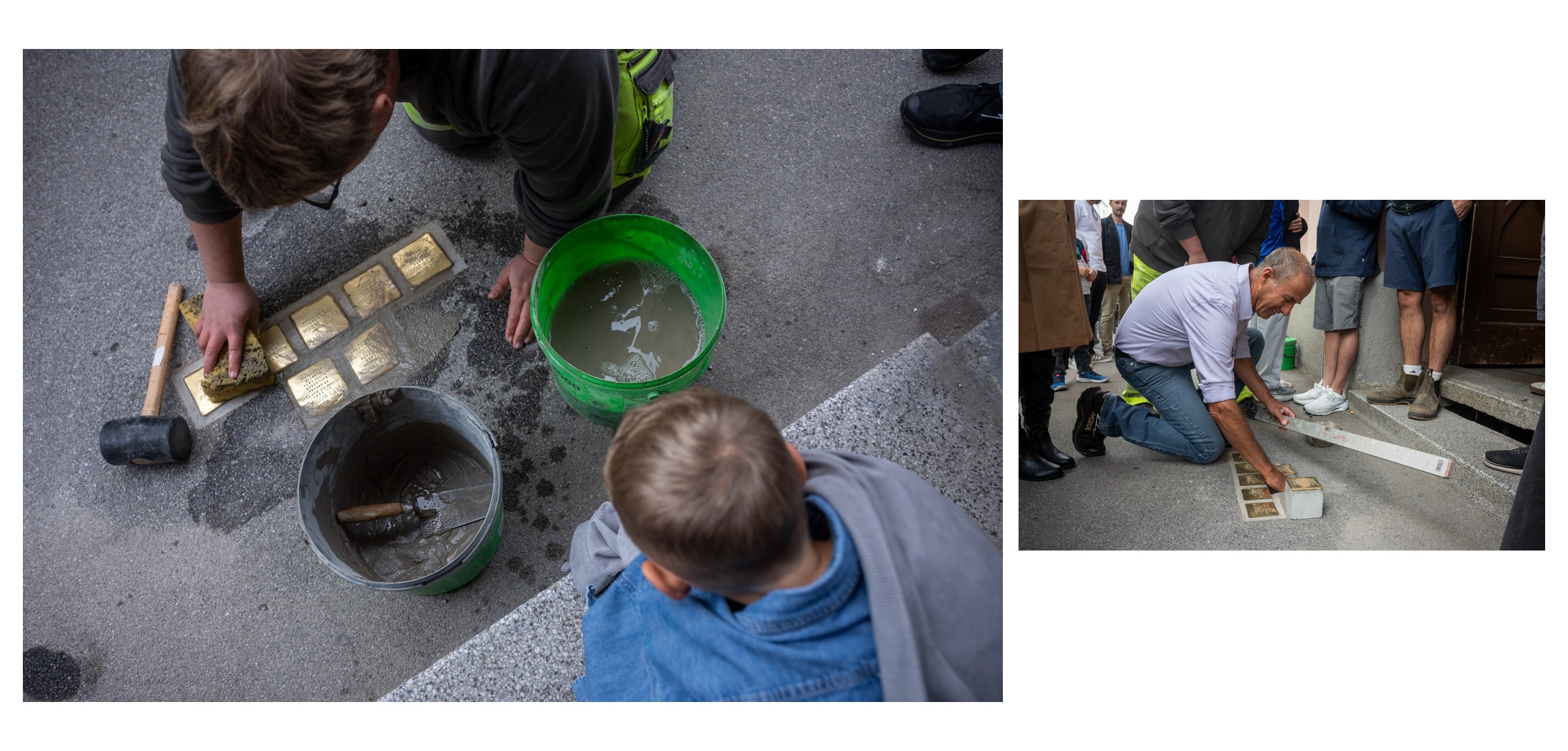
As the installer finished the cement work, we continued our walking tour, learning more about Graz and the places connected to the family's past.
A Welcome From the City of Graz
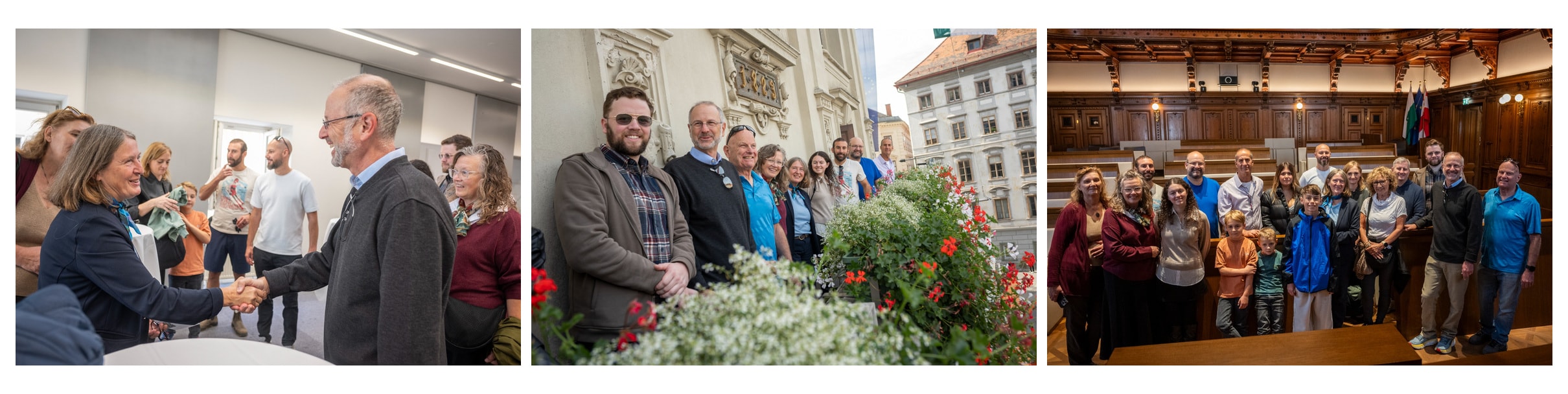
Our next stop was City Hall, where we had been invited to meet the mayor of Graz.
Mayor Elke Kahr, a member of Austria's Communist Party — an interesting aspect of the city's political landscape — welcomed us warmly.
She shared stories about Graz and spoke about the city's commitment to supporting the Stumbling Stones organization and preserving the memory of families like ours.
We were invited onto the famous City Hall balcony for photographs and into the City Council chambers.
I had brought a small gift from San Francisco to express our appreciation. When I presented it to the mayor, she immediately arranged for gifts from Graz to be given to us in return!
It was a lovely, unexpected exchange.
We enjoyed the reception, spent time talking with everyone, and appreciated the generosity of a city that had taken such an interest in remembering our family's history.
One More Visit to the Clock Tower
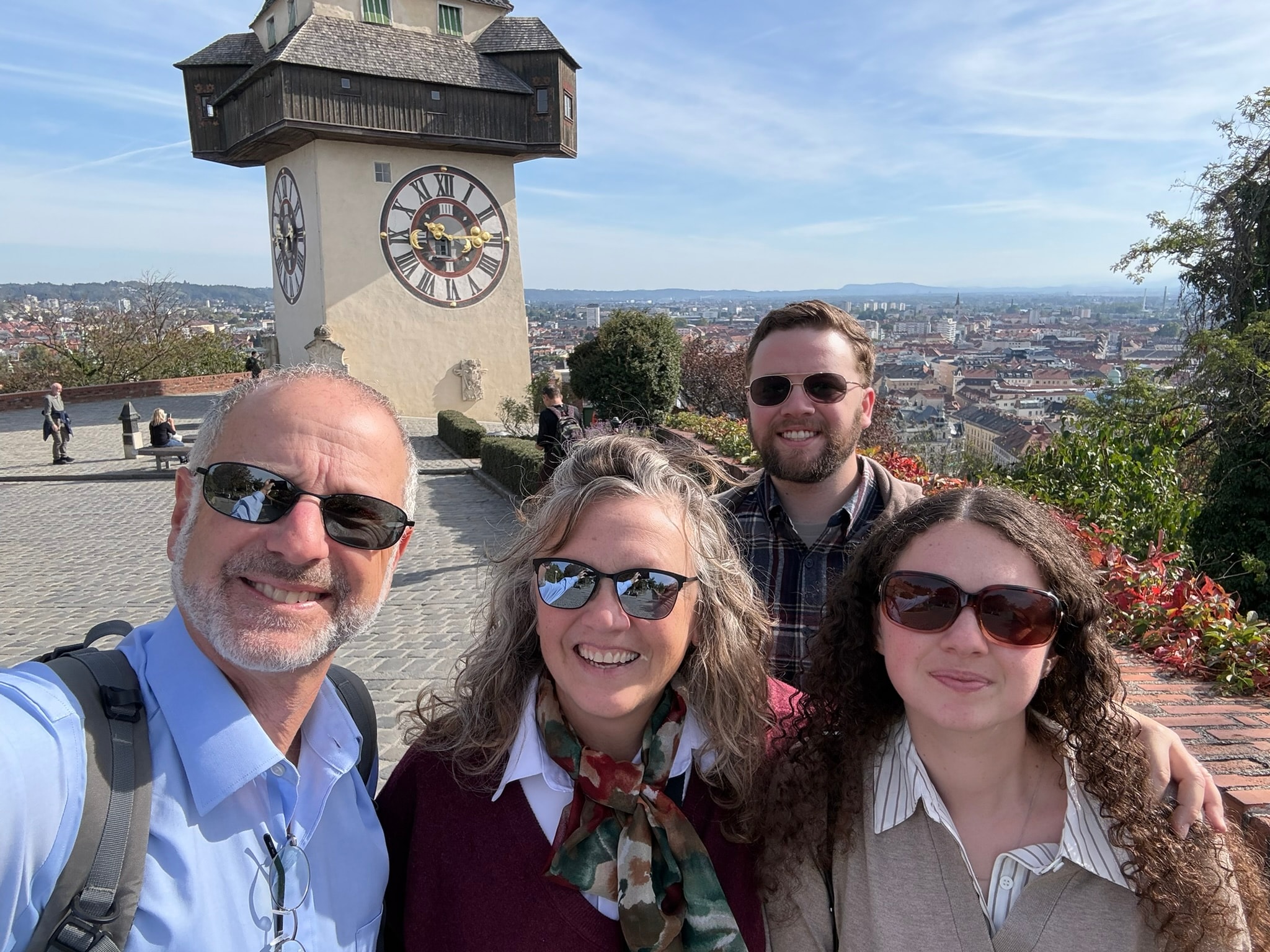
With a little time before the afternoon ceremony, we made our way up the hill to Graz's famous clock tower.
The sun was shining, and we had a chance to enjoy the views and spend a few moments together.
During our first visit in 2025, Steve and I had stood in this same place, wondering whether Otto had climbed these steps as a young boy.
Now, we were back with our children and family members, just hours away from a ceremony honoring Otto, his parents, and his siblings.
It was hard not to think about how much had happened in just over a year.
And then it was time to return to Netzgasse 11.
The ceremony was about to begin.
The Kindness of Strangers
When we returned to Netzgasse 11 that afternoon for the ceremony, I wasn't prepared for what we would find.
People. So many people.
We knew our family would be there, along with the historians and representatives from the organization. But what we hadn't anticipated was the number of people from the community who had come simply to show their support — almost 50 in total in front of the apartment.
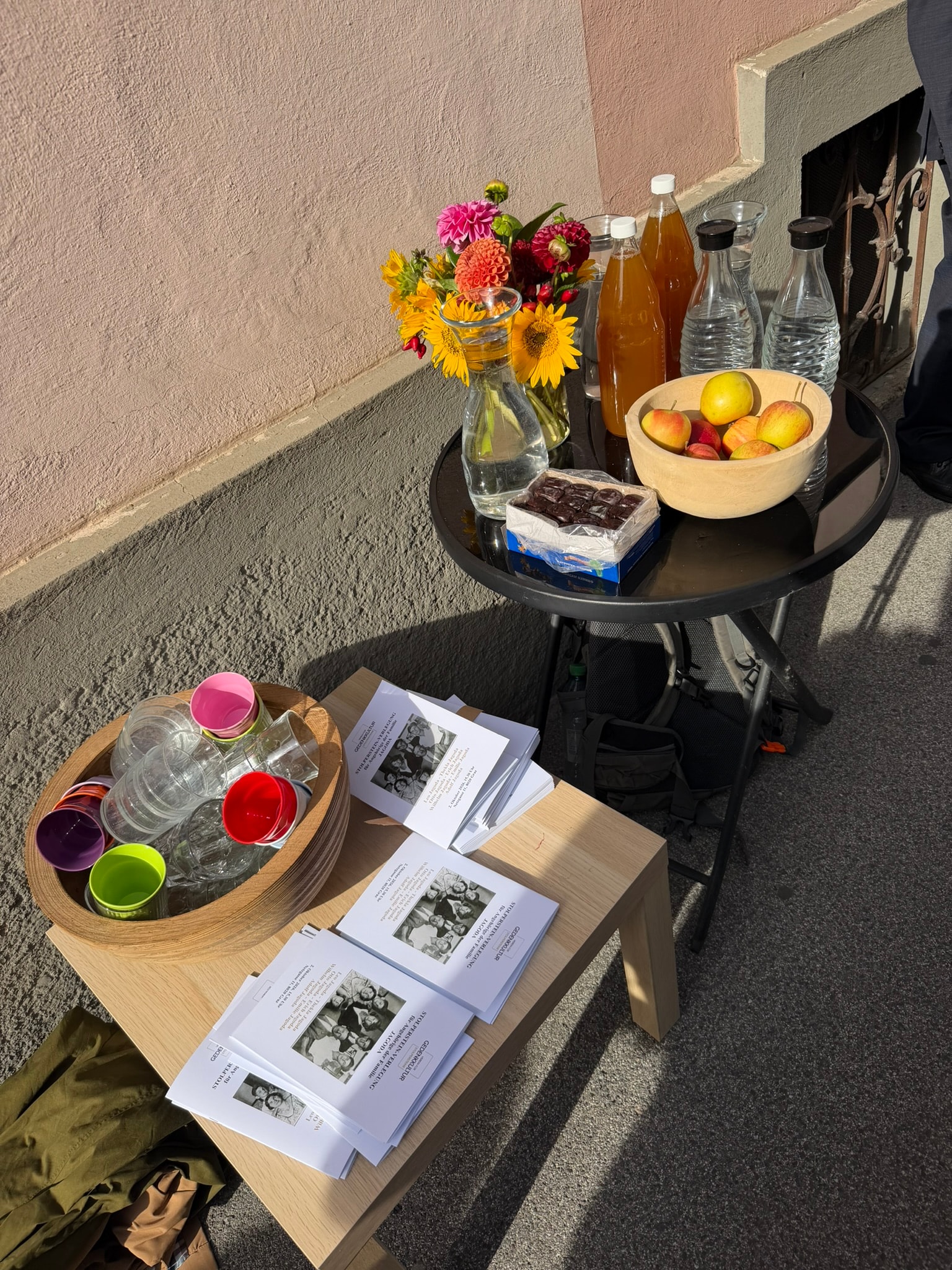
One of the residents of the apartment building had taken it upon herself to prepare a beautiful spread of fresh fruit, dates, juice, and flowers. No one had asked her to do this. She simply wanted to welcome everyone.
And then there was the story of our nephew Brent.
Brent, who has spent years researching and maintaining the Jagoda family tree, had been flying from Munich to Graz the day before the ceremony. During the flight, he struck up a conversation with a woman sitting nearby and told her why he was coming to Graz.
He explained the history of the family, the Stumbling Stones, and where the ceremony would take place. She was familiar with the neighborhood.
And guess what?
The next afternoon, she showed up at the ceremony with her partner.
Someone Brent had met on an airplane just the day before had made the effort to come and stand with our family.
That was the moment that brought me to tears.
Here we were, gathered outside a building where the Jagoda family had once lived, remembering a time when people were persecuted and forced to flee their homes.
And surrounding us were people who had come together out of kindness, compassion, and respect.
Some were family. Some were neighbors. Some were complete strangers.
They didn't have to be there.
But they were.
We had traveled to Graz to honor a family whose lives had been forever changed by hatred and persecution. Yet standing on that sidewalk, what overwhelmed me was the goodness of the people around us.
For a few hours, we were connected not by where we came from or what we believed, but by a shared desire to remember, to honor, and to care.
We came to Graz to make sure the past would not be forgotten. We were reminded of how much goodness still exists in the world.
Remembering Through Words and Music
The ceremony itself was beautiful.
There were remarks from representatives of the city and the Stumbling Stones organization, along with reflections on the history of the Jagoda family.
Then it was time for Steve and Yuval to speak.
Listening to them share family stories, and watching how those memories resonated with the people gathered around us, was incredibly touching.
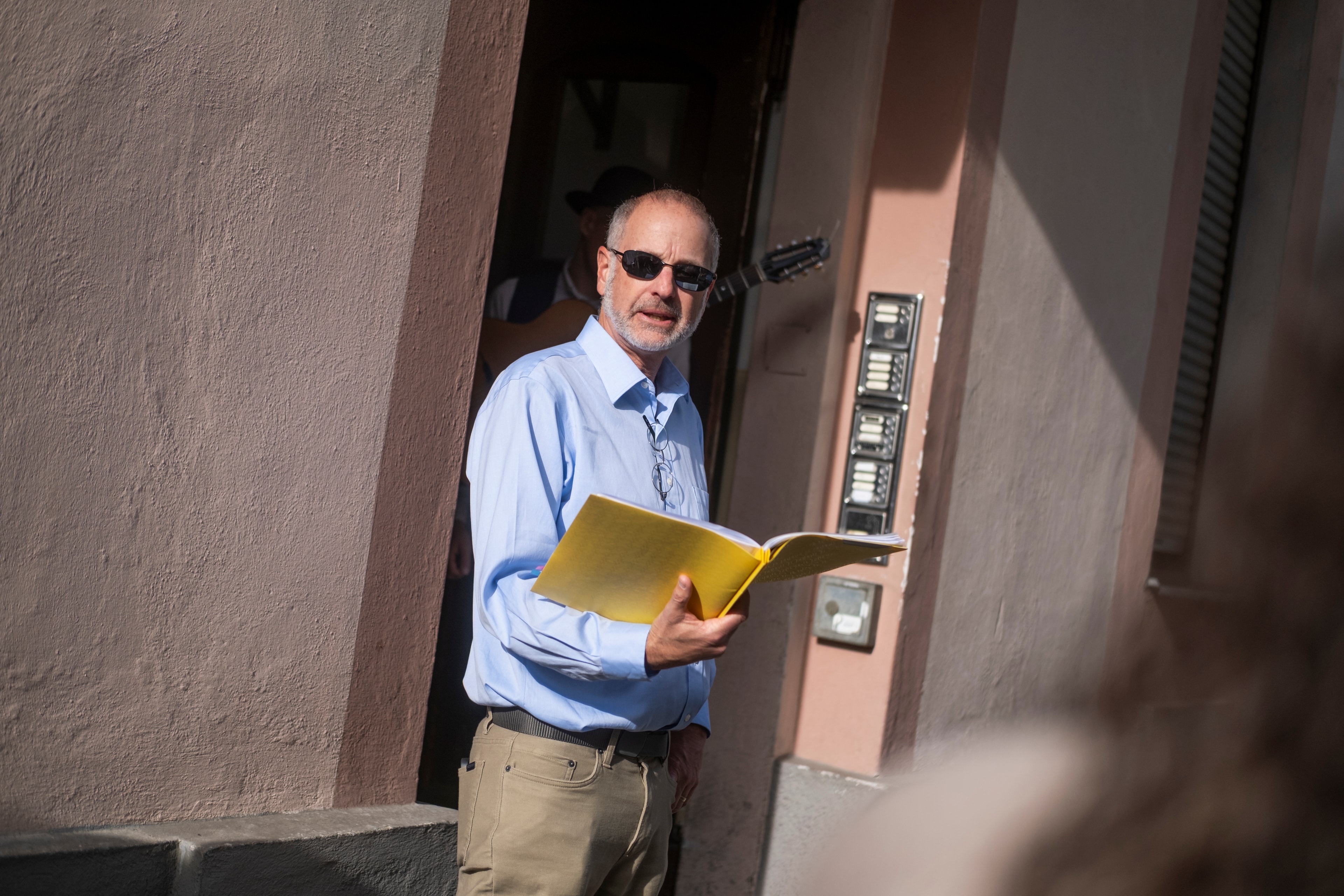
There was a feeling of closure. Not that the history could ever be changed, but that the family's story was finally being acknowledged in the very place where so much of it had unfolded.
And then there was the music.
Otto had always loved music. During the last year of his life, he would often sing Jewish songs, something we remembered fondly.
As the musicians performed, I couldn't help thinking about him.
He would have loved this.
The music was such a beautiful fit for the day, and it brought me to tears.
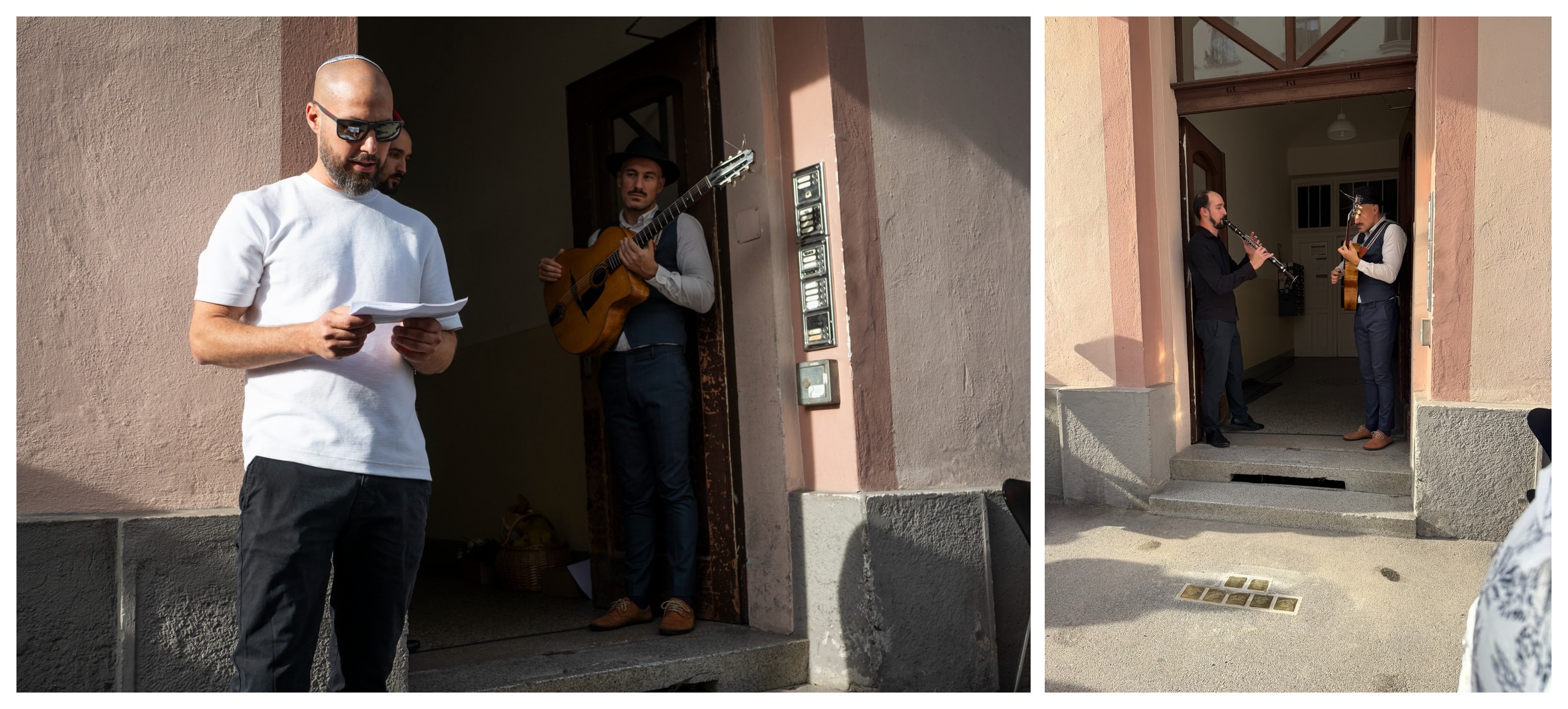
Toward the end of the ceremony, we gathered around the newly installed Stumbling Stones and laid flowers and small stones beside them.
Seven brass Stumbling Stones, each bearing a name, now permanently marked the sidewalk outside the family's former home.
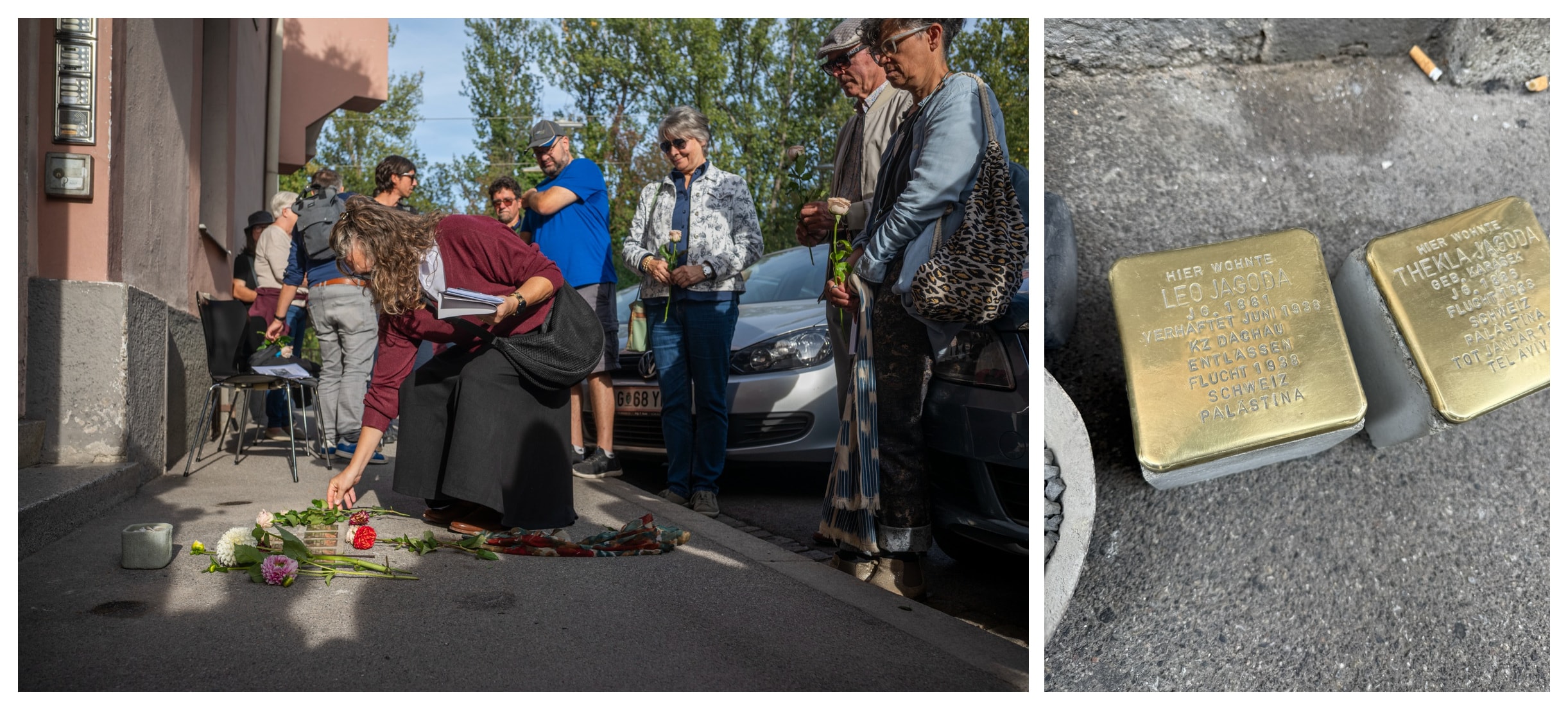
For decades, the Jagoda family's story had largely lived in memories, photographs, and documents.
Now, anyone walking along this street could stop, read their names, and remember.
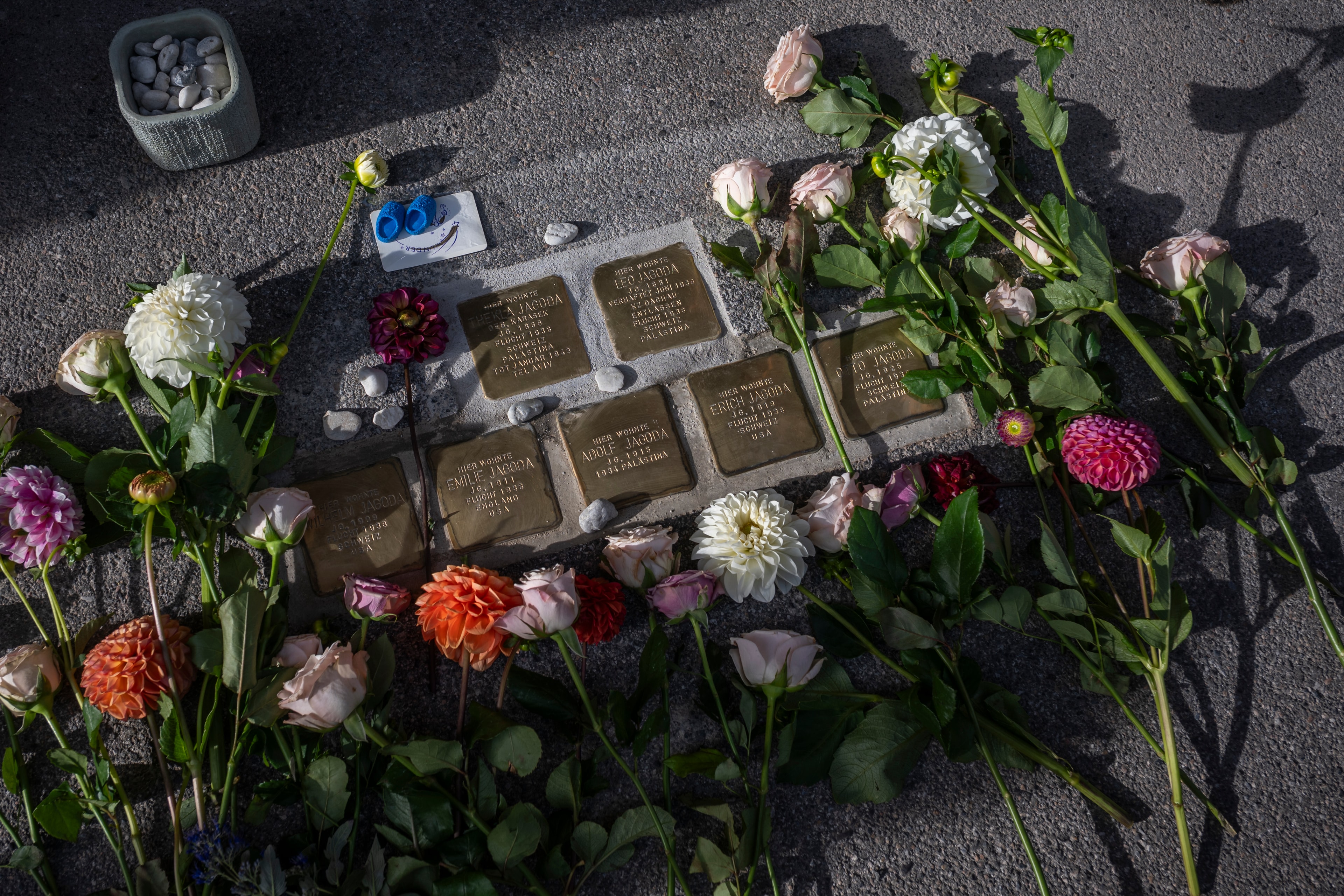
Stepping Into the Past
There was one more unexpected experience that day.
A woman living in the building generously opened her home to us, allowing us to see what the Jagoda family's apartment might once have looked like.
Walking through the doorway was unlike anything we'd experienced during our visits to Graz.
We had spent months reading about the family's life here. We'd studied documents, looked at old photographs, and walked the streets they once knew.
But stepping inside made everything feel different.
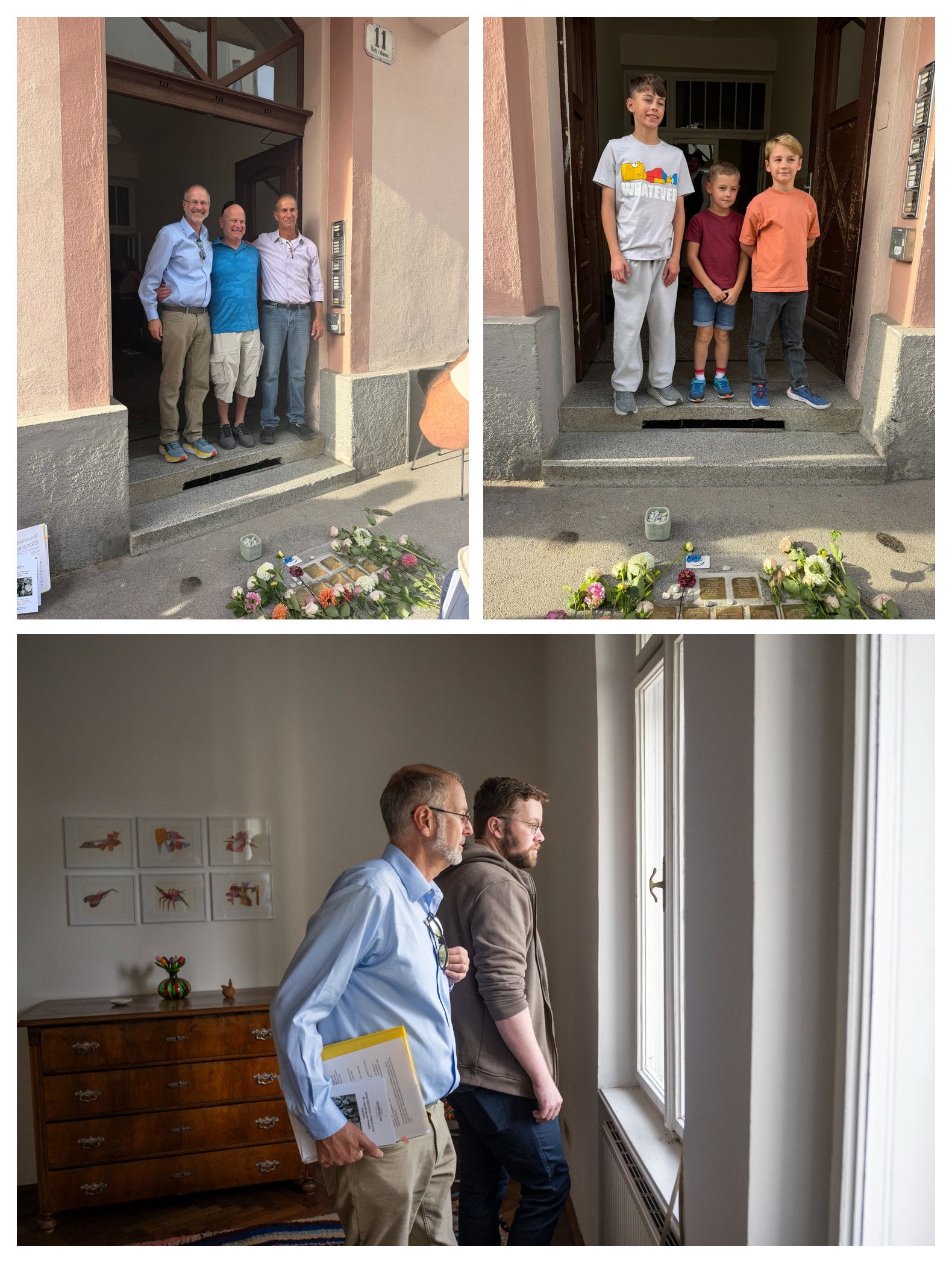
For a moment, it was almost as though we'd been transported back in time.
And then we learned another extraordinary detail.
Anne, a current resident of the building who had sponsored one of the Stumbling Stones, shared a story she'd heard from the children of an older couple who had once lived there.
When the Jagoda family fled Graz, they had apparently given some of their furniture to this couple.
The couple treasured those pieces, keeping them in their parlor and reserving them for special occasions. The furniture was treated with particular care because it had come from the Jagoda family.
Nearly 90 years later, their children still remembered.
Of all the historical documents, photographs, and records we'd uncovered, there was something especially moving about this simple story.
The Jagoda family had been forced to leave so much behind. Yet something they had given to another family was remembered and cherished for generations.
It was another reminder that history doesn't live only in archives and museums. Sometimes it survives in the memories of neighbors, in the stories passed down through families, and in the kindness people show one another.
A Connection That Lives On
When we first visited Graz in 2025, we knew it was the birthplace of Steve's father, Otto. We walked its streets, climbed to the clock tower, and wondered what life might have been like for him as a young boy.
We left that first visit with questions and a determination to learn more.
A little over a year later, we returned with our children and extended family. This time, we came with answers, new discoveries, and the opportunity to honor seven members of the Jagoda family.
But what we hadn't anticipated was how much the people of Graz would give us in return.
The historians who worked tirelessly to uncover our family's story. The residents who sponsored Stumbling Stones, welcomed us with food and flowers, and opened their homes. The city officials who honored our family. And the strangers who showed up simply because they cared.
We came together to remember a painful chapter of history, one that forced a family to leave behind their home, their business, and the city they knew.
Yet what I will remember most is the kindness.
The willingness of people to come together, to remember, to listen, and to honor a family they had never met.
Otto never returned to Graz after leaving at 13. But his children, grandchildren, and extended family did.
And now, outside the family's former home, seven brass Stumbling Stones ensure that their names and stories will remain part of the city.
When we left Graz this time, it felt different.
We no longer felt like visitors passing through.
We felt like we were part of Graz.
And that connection will live on forever.
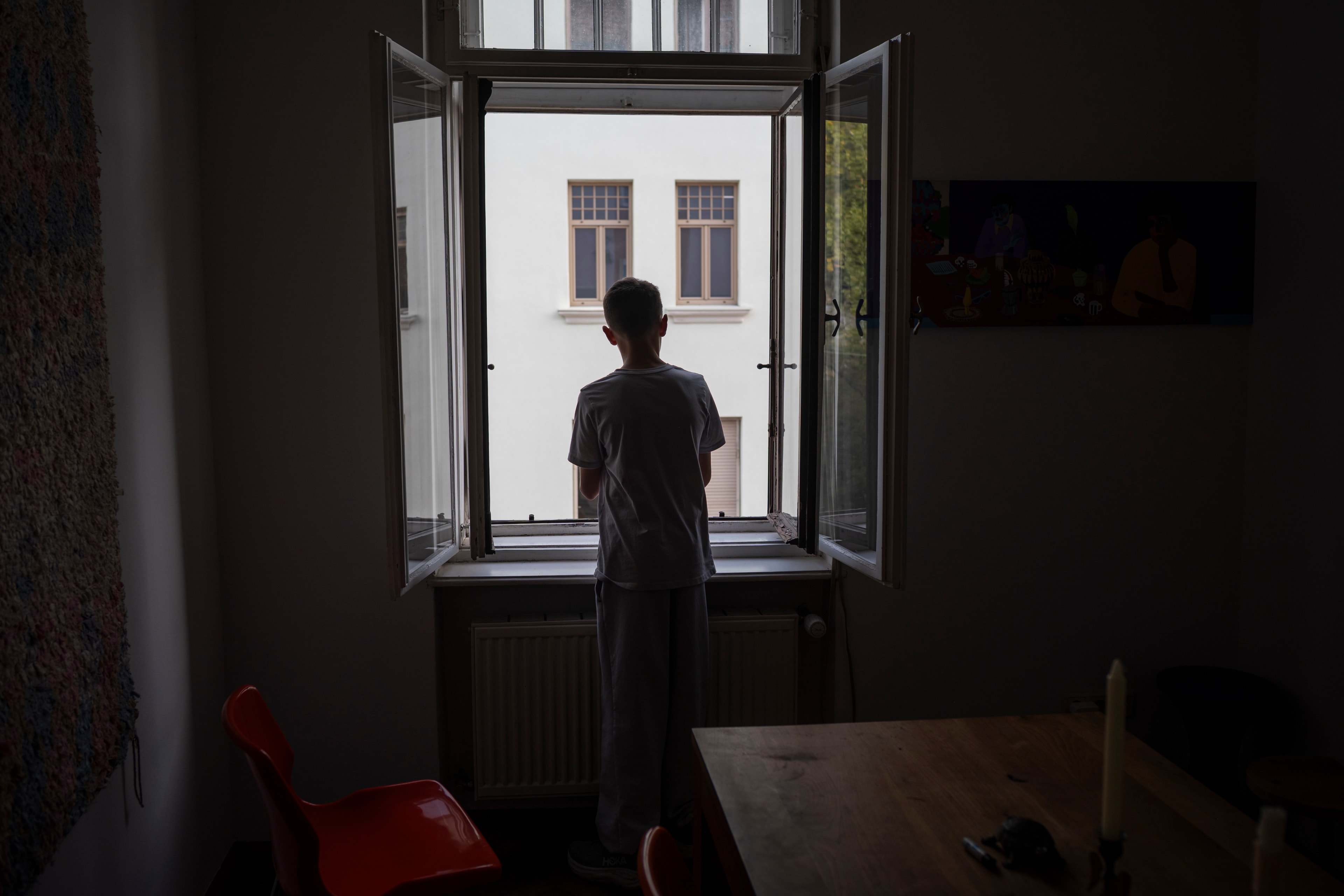
A special thank you to Alexander Danner (@alexandrosdanner) for beautifully capturing moments from our family's homecoming and Stumbling Stones ceremony in Graz, Austria. Additional photographs are from our family collection.